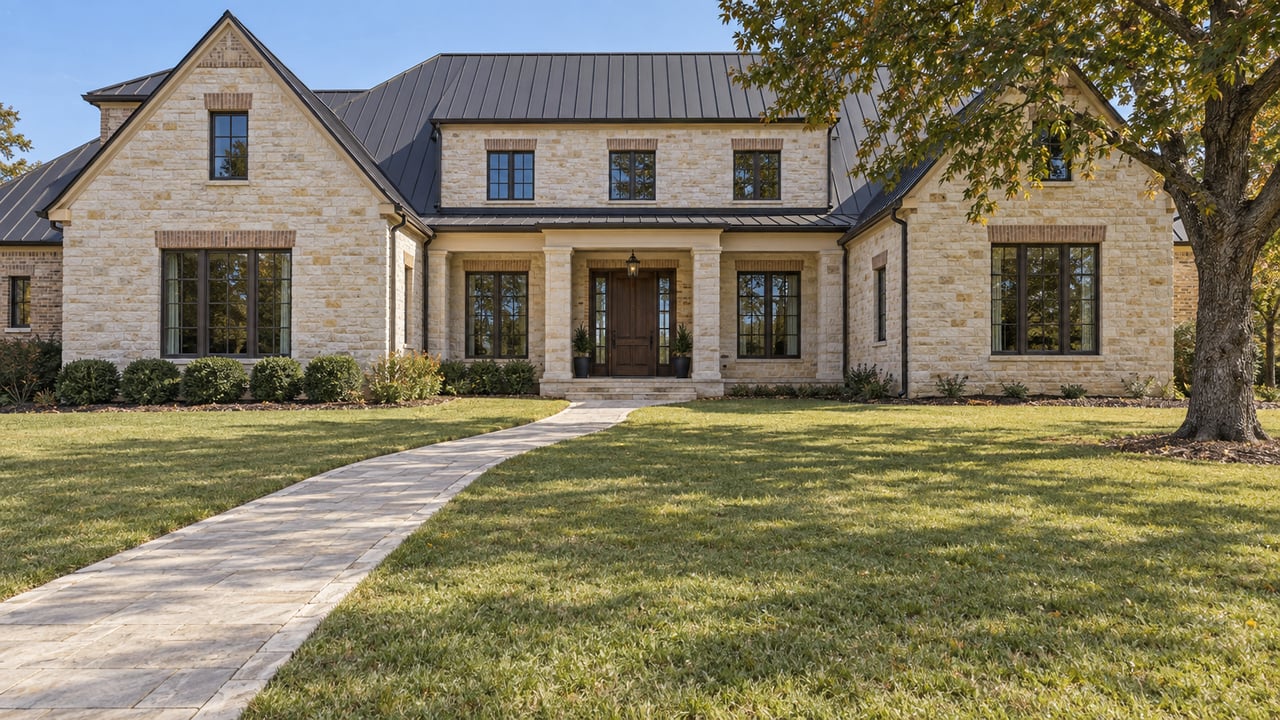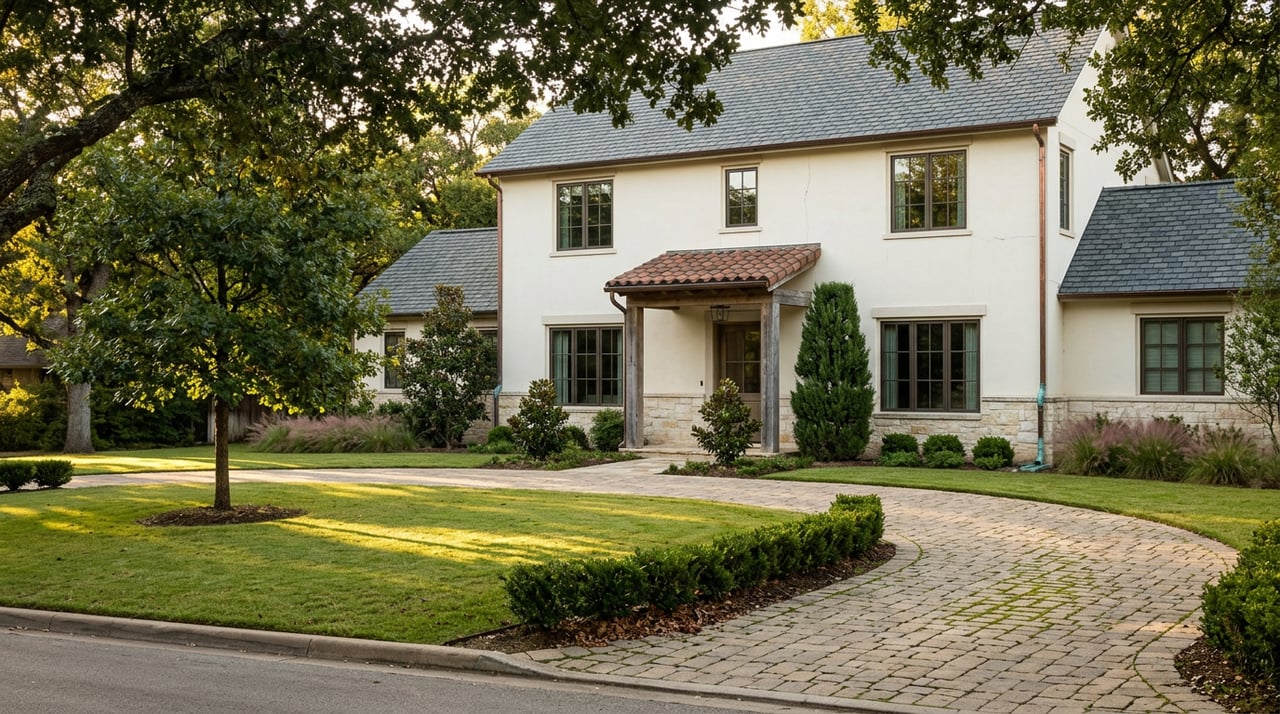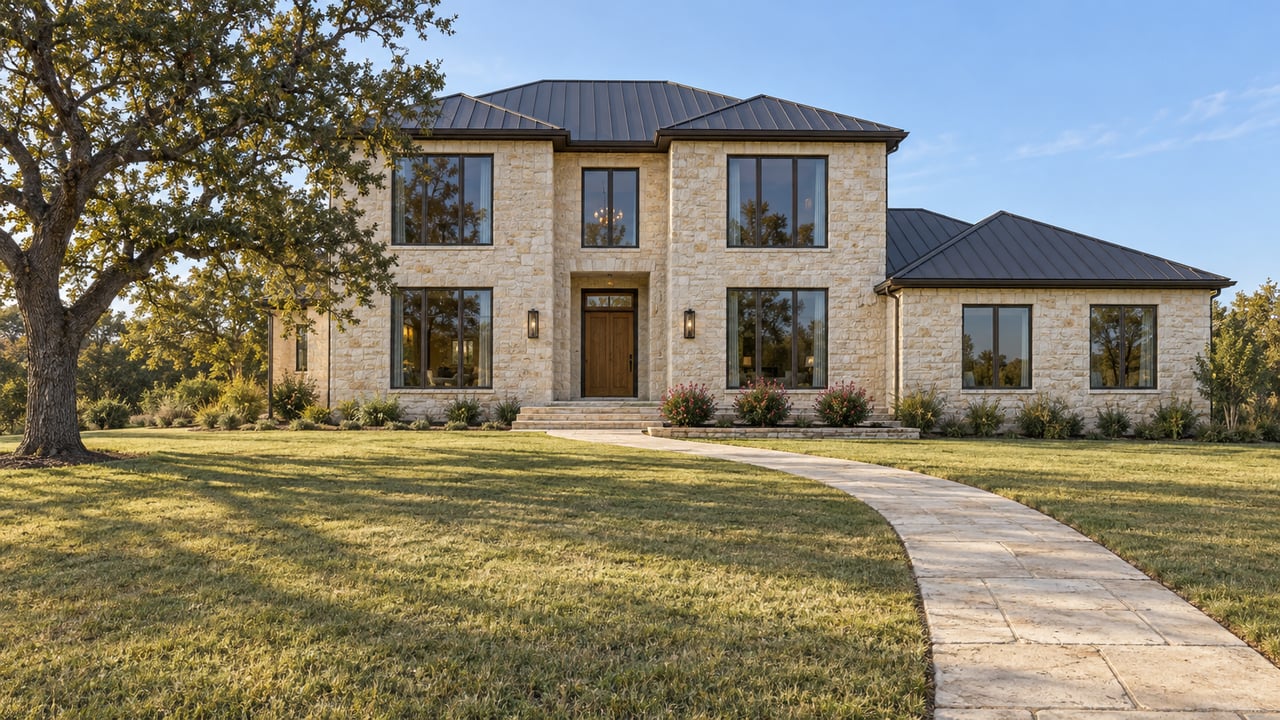
"It is not simply an underdeveloped tract awaiting its next use. It is part of a larger conservation vision that residents, town leaders, and previous councils have spent decades protecting."
A resident said that to the Flower Mound Town Council on June 1, 2026, about a 19-acre surplus tract inside the Cross Timbers Conservation Development District, as shown in Swagit's recording of the meeting. A council member then looked up the parcel during the meeting. Its Master Plan land use is Cross Timbers conservation and its zoning is agricultural, so any rezoning "would require some discretionary process."
For anyone shopping for acreage on the west side of town, that phrase is the key part of the transaction. New large-lot homes in western Flower Mound pass through several approvals, each with conditions, and an approval can still end without homes being built. One project from the past year shows exactly that. As a result, new acreage arrives slowly, and the homes already sitting on large lots face less new competition than the zoning map suggests.
The rules settle the lot before any builder does
Flower Mound's SMARTGrowth Analysis links the town's Master Plan to project-level review. It applies to Master Plan amendments, zoning changes, development plans, record plats and applicable site plans. Every project is scored in six areas: infrastructure, facilities, services, economic development, environmental quality and community character. Each criterion is pass/fail, and a project that fails one is denied until it complies.
Conservation development adds a density ceiling. Homes are clustered and the remaining land is protected by easement. Net density is capped at one unit per two acres on agricultural-zoned tracts and one unit per acre on SF-E tracts. The resident who spoke in June also said the council strengthened the district's standards in 2022.
Together, these rules cap how many homes a western tract can hold before anyone discusses design. The next layer is the conditions a council attaches when it says yes.
Three approvals with three different outcomes
| Project | Council action | Key conditions | Status as of early October 2026 |
|---|---|---|---|
| Eden Ranch, ~335 acres | Rezoning and related requests approved 4-1 each, Nov. 3, 2025 | 25% lot-coverage cap, ADUs by specific-use permit, fewer 0.75-acre lots, site plan still required | Owner foreclosed on the developer in February; 51 central acres sold in July; residential plan on hold |
| Havenwood, Toll Brothers, ~447 acres | Phase one subdivision plan and tree permits approved March 2, 2026; outlets differ on whether the tree vote was unanimous or 4-1 | Max 222 homes in four phases; at least 25% of lots one acre or larger; floodplain and drainage studies for all phases | Phase one approved for up to 87 lots; no later phase approval or sales launch found |
| Canyon Falls Village 3, Perry Homes, 27 acres | Approved 4-0, Jan. 20, 2026 | 65 lots, 10,000-square-foot minimum lot size, limited slope and floodplain exceptions | Final residential subdivision in Canyon Falls |
Eden Ranch: approved, then on hold
Eden Ranch covers 335 acres north of Cross Timbers Road between Shiloh Road and Red Rock Road. The plan called for 158 homes in a gated community with an orchard, grazing areas and greenhouses, and it had been revised for years to fit town requirements before it reached a vote. Community Impact reported that the council approved it with modifications. Lot coverage was capped at 25%, accessory dwelling units were made subject to a specific-use permit, a Kings Road/Shiloh Road entrance was removed, and the number of undersized 0.75-acre lots was reduced. The approval also called for a stretch of Shiloh Road to be widened to four lanes. The traffic analysis specified 1,600 feet of widening north from FM 1171.
None of that has become housing. According to the North Texas Sun, the property owner foreclosed on the developer in February. A warranty deed recorded July 15 then transferred 51 acres in the middle of the site to 924 Management, LLC. Court documents tied to that sale describe plans for a private school campus with athletic fields and lighting. The paper reported that the Eden Ranch residential vision is on hold.
For a buyer, this shows the difference between zoning and supply. A tract can be rezoned for homes, appear in local coverage as an approved neighborhood, and still deliver no lots.
Havenwood: approved, with conditions on every phase
Havenwood made it further, and its approval shows how much the rules shape the finished product. The Toll Brothers community covers about 447 acres with a cap of 222 homes. Its first phase allows up to 87 lots, and at least 25% of lots across the development must be at least one acre. The Cross Timbers Gazette reported that phase one spans 172 acres. The March approval required a floodplain study and a drainage study for the first phase that will be used for all four phases. It also limited floodplain construction to uses such as private trails, retention ponds, grading, and roadway and utility crossings. The two outlets reported the tree vote differently. Community Impact described the tree-removal permits as unanimously approved, while the Gazette reported a 4-1 vote on the tree removal, with the debate centered on three specimen post oaks.
Seven months later, Toll Brothers' Flower Mound page lists other communities, including Oakbridge Crossing, Dixon Estates and Town Lake at Flower Mound, but not Havenwood. Our research found no later phase approval or public sales launch.
Canyon Falls: the last subdivision
Canyon Falls Village 3 is the cleanest of the three approvals, and it also marks an end point. The council approved Perry Homes' 27-acre plan 4-0 on Jan. 20, 2026. It includes 65 single-family lots with a 10,000-square-foot minimum. It is the final residential subdivision in Canyon Falls. At full build-out the development will hold 795 homes, below its 972-home cap. The Gazette's follow-up explained that the approval still needed exceptions for slope grading and work in a floodplain.
The same logic applies on the east side
Density in eastern Flower Mound gets bargained down in a similar way. Planning and Zoning recommended denial, 4-2, of an earlier Lakeside East plan with apartments. On Oct. 6, 2025, the council unanimously approved a redesign that replaced 326 apartments with up to 132 townhomes, alongside hotel, retail and office uses by Realty Capital. The approval also sets the order of construction. At least 15,000 square feet of nonresidential space between the townhomes and FM 2499 must be built before any townhome can receive a certificate of occupancy. In both parts of town, the homes come last.
What this does to the August 2026 numbers
When new acreage arrives this slowly, the existing housing stock makes up most of the market, and the citywide statistics look different as a result. The NTREIS MLS summary for August 2026, which covers single-family homes, compares Flower Mound with August 2025:
- Closed sales were flat at 87.
- The median sale price rose from $615,000 to $675,000, up 9.8%.
- The average sale price rose from $714,542 to $813,017, up 13.8%.
- The median price per square foot rose from $227.83 to $237.05, about 4%.
- Active listings rose from 233 to 252, months of inventory from 3.1 to 3.2, and median days on market from 35 to 38.
- Homes sold for 96.0% of list price, compared with 95.8% a year earlier.
The median rose more than twice as fast as price per square foot, and the average rose faster still. With the same number of sales, that pattern points to bigger and higher-end homes making up more of August's closings. Individual houses did not gain 10% in a year. Inventory, days on market and sale-to-list ratio barely moved, which does not match a market where every home is appreciating quickly.
The figures also leave out some sales. The Texas Real Estate Research Center says its MLS-based counts exclude transactions negotiated outside the MLS, including builder-direct sales. New homes in places like Canyon Falls may not appear in these totals at all. Public ZIP-level data for 75022 and 75028 is not available from these sources, so the citywide number cannot be split into east and west.
For a buyer comparing an existing one-acre home with a future lot in an approved community, the useful questions are where the project stands in the approval sequence, which conditions still need to be met, and whether anything has changed hands since the vote.
FAQ
If a western Flower Mound tract has been rezoned, are homes coming? Not necessarily. Eden Ranch was rezoned in November 2025, and its approval still required a separate site plan. By July 2026, part of the land had been sold for a different use.
How does agricultural land in the Cross Timbers district get rezoned? It goes through a discretionary process reviewed under the district's conservation standards, as a council member explained on June 1, 2026. Projects also go through SMARTGrowth's pass/fail review.
Why might a new-construction sale not appear in Flower Mound's monthly data? The NTREIS-based figures count MLS transactions only, so builder-direct sales are excluded.
If you are weighing an established acreage home in western Flower Mound against a lot in a community that is still moving through approvals, Hacker Property Group can review the council record, the conditions attached to the project and the recent comparable sales with you before you commit. Let's Connect.
This article is general information, not legal, tax or financial advice. Consult a qualified professional about your situation.