In February 2026, the average price of a waterfront listing in Grapevine came in at $847,277, or $309 a square foot. Look at the city as a whole during that same stretch and Zillow's home value index put the typical Grapevine home closer to $527,800, up about 1 percent from a year earlier as of its late-June update. Redfin's trailing three months through April 2026 landed in between, at a median sale price of $627,000, up 15.1 percent year over year, with homes averaging 29 days on market and selling at roughly 100 percent of asking.
Three real numbers, three real time windows, and a spread of more than $300,000 inside one zip code. That spread alone does not show how much either landmark contributes.
Lake Grapevine, a 7,380-acre U.S. Army Corps of Engineers reservoir with 60 miles of shoreline, is associated with higher prices for waterfront listings. DFW International Airport, whose flight paths cross specific Grapevine streets, is associated with lower prices in some areas. If you're cross-shopping Grapevine against Southlake or Keller using a single median, that figure does not distinguish lake access from airport exposure.
The Premium You Can See
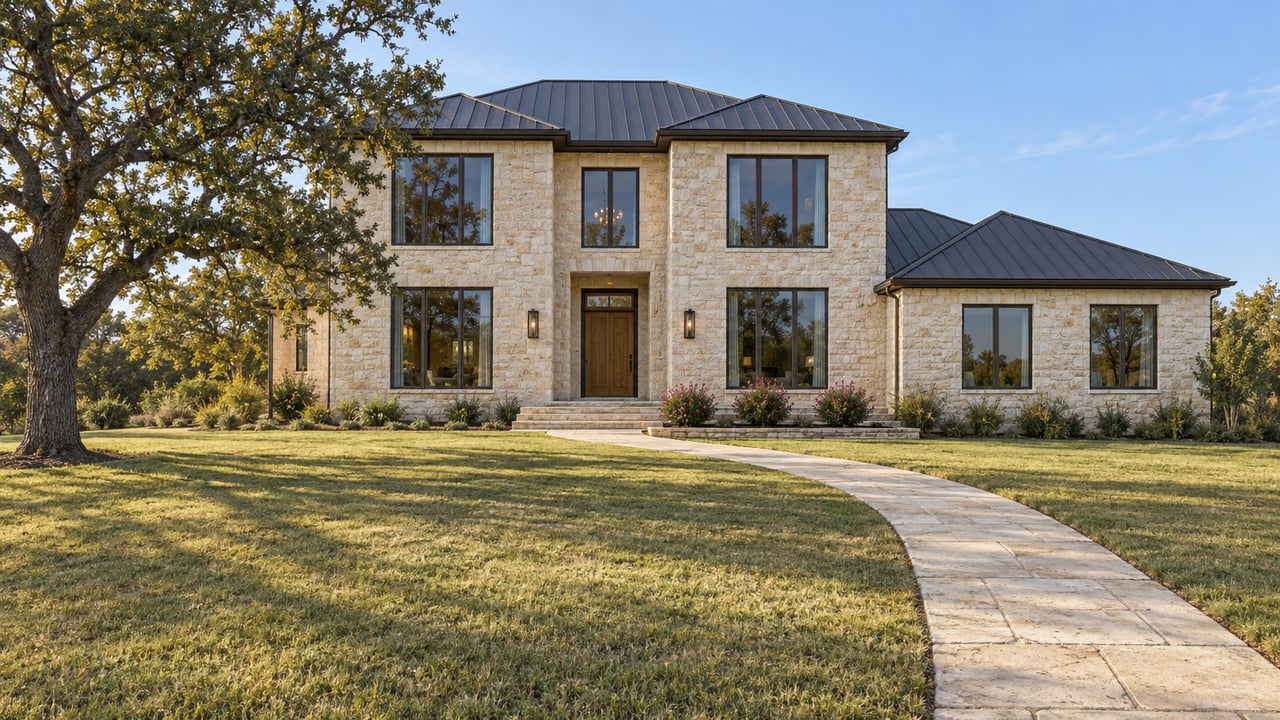
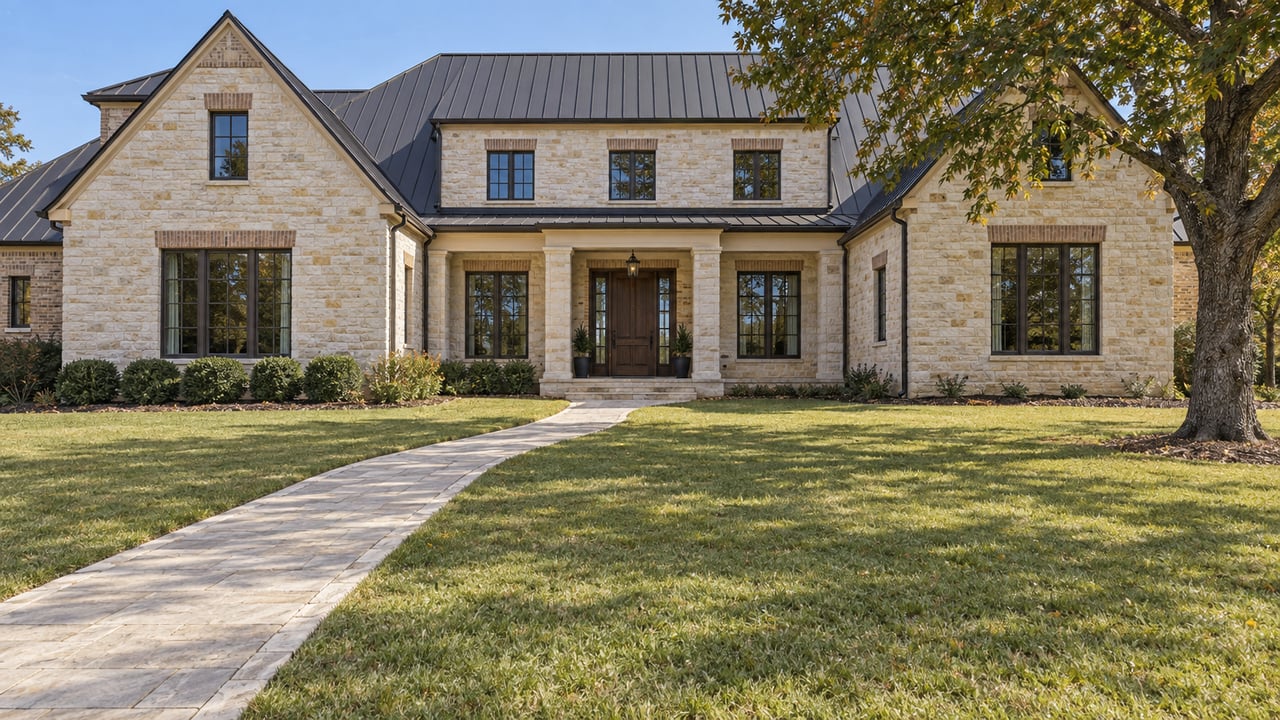
The clearest evidence of the lake premium sits along the Dove Road corridor and in Grapevine Estates, where custom homes on acre-plus lots typically run from $700,000 to $1.5 million or more. A few minutes farther from the shoreline, established neighborhoods including Silverlake, Timberline, Lakewood Hills, and Stone Bridge hold a broad middle band of roughly $400,000 to $650,000, most of it HOA-governed and built out in the 1990s and 2000s.
Closer to the water itself, a smaller lake-adjacent neighborhood called Lake Pointe sits southwest of East Grapevine and southeast of Dove Park, within reach of Farina's Winery & Cafe on its walk to the shoreline trails. It's the kind of pocket that never shows up in a citywide average but explains why one Grapevine address can cost twice what another does three streets over.
That February waterfront figure of $847,277 isn't a citywide statistic. It's the average for listings specifically filtered for water access, which is exactly the point. A lake view is a feature a search site can check a box for, so the market has already priced it in, publicly, in a number anyone can pull up.
Airport Exposure Is Hard to Isolate
Flight path exposure doesn't get its own checkbox. You can filter Grapevine listings by waterfront, by school district, by lot size. No major site filters by whether a given roofline sits under a departure corridor on a given day, so airport exposure and its effect on price are not shown as a separate category in portal medians. The figures do not break out any price differences by street.
DFW Airport runs its own answer to this problem. The airport's Noise Compatibility Office monitors sound through permanently mounted noise stations spread across nine cities and three counties, correlates that data with FAA radar feeds, and maintains a public flight-tracking system built, in the airport's own words, so a potential home buyer can understand the type of operations that could occur over a home of interest before deciding to purchase it.
Two more things worth knowing before you lean on a single showing to judge how loud a street actually is. First, flight paths aren't fixed. Runway maintenance and prevailing wind direction have shifted which Grapevine neighborhoods sit under active corridors before, and they can shift again. Second, the airport's own noise office notes that aircraft sound louder on hot days, when planes climb more slowly, and on overcast days, when the noise rebounds back down off low cloud cover. A quiet Tuesday morning tour tells you very little about a Wednesday afternoon in August.
Before you write an offer on anything near the airport corridor, three steps are worth the ten minutes they take:
- Pull the flight track history for the specific address, not the general area
- Ask whether the pattern has shifted recently due to runway work or seasonal wind
- Call DFW's Noise Compatibility Office directly if the answer still isn't clear
Grapevine by the Corridor, Not the City
| Corridor | Typical price range | What defines it |
|---|---|---|
| Dove Road / Grapevine Estates | $700K–$1.5M+ | Custom homes on acre-plus lots near the lake |
| Silverlake, Timberline, Lakewood Hills, Stone Bridge | $400K–$650K | Established, HOA-governed neighborhoods a short drive from the shoreline |
| Central Grapevine near Historic Main Street | $350K–$500K | Older 1970s–1990s housing stock, walkable to downtown |
| Waterfront listings (Feb. 2026 average) | $847,277 avg / $309 per sq. ft. | Direct lake frontage, priced and filtered as its own category |
The Historic Core Sets the Floor
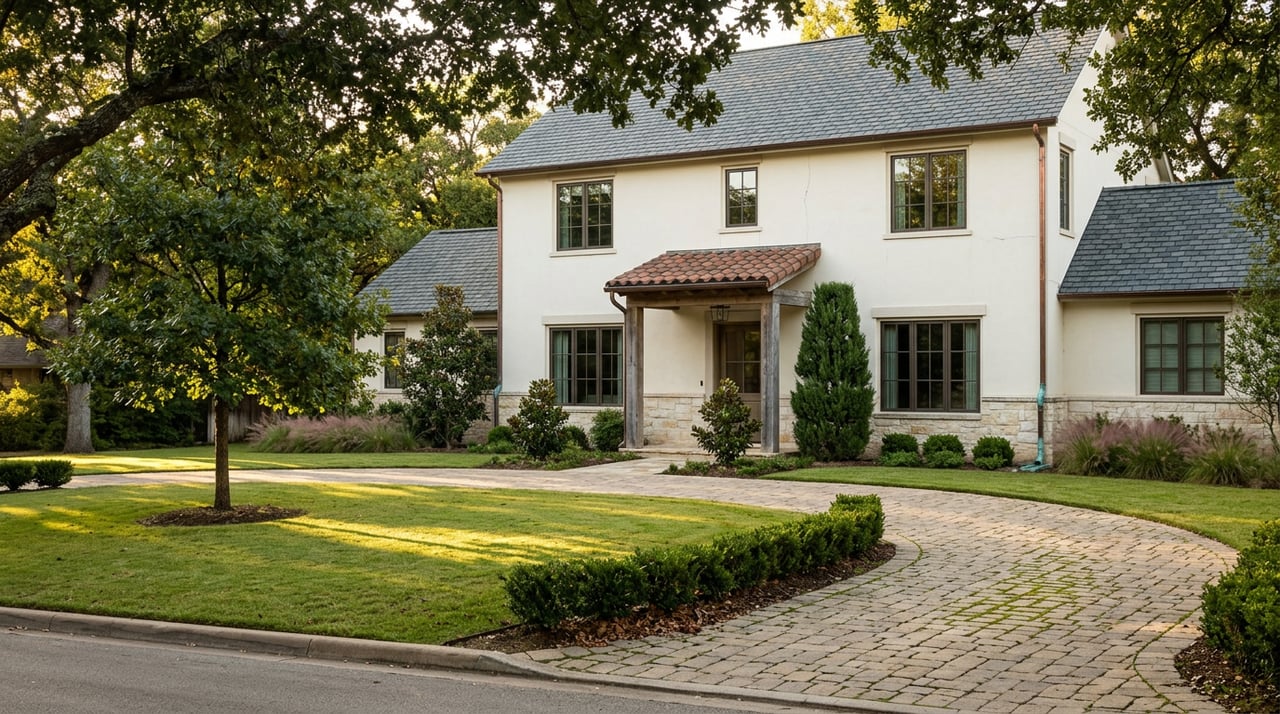
The oldest housing stock in Grapevine sits within walking distance of Historic Main Street, most of it built between the 1970s and 1990s, served by Grapevine-Colleyville ISD along with the rest of the city. It's smaller, older, and priced well below the lake corridor, and it's a meaningful part of why the citywide median lands where it does. A buyer comparing Grapevine's overall number to Southlake's is often comparing a blend that includes this older downtown-adjacent stock against a market with a much narrower range of home ages.
That blending effect works in both directions. The historic core pulls the citywide median down. The lake corridor and the waterfront-specific figure pull it up. The number that finally gets reported is a blend of two markets that don't behave alike and shouldn't be evaluated as if they do.
What This Means If You're Cross-Shopping Grapevine
When someone tells you Grapevine's median is in the mid-$500,000s or the mid-$600,000s, the honest response is to ask which slice of the city that figure is drawn from. A number pulled from waterfront-only listings, a number pulled from the last three months of closings, and a trailing twelve-month value index will all tell you something true and none of them will tell you the same thing.
Waterfront listings can be searched as a separate category; airport exposure and its effect on price are not shown as a separate measure in the same way. Checking a specific address, rather than relying only on a zip-code average, can provide more context.
FAQ
Does being near Lake Grapevine guarantee a water view? No. Most of the Dove Road corridor and the surrounding established neighborhoods sit near the lake rather than directly on it. Direct waterfront is a smaller, separately priced category, which is why the February 2026 waterfront average runs well above the citywide figures.
Is flight noise the same across all of Grapevine? No. Exposure depends on the specific runway configuration in use, which shifts with wind direction and periodic construction. The only reliable way to know how a given address is affected is to pull its flight track history rather than judge from a single visit.
Should I trust the median price I see for Grapevine online? Treat it as a starting point, not a verdict. Ask whether the figure reflects the full city, a recent quarter of closings, or a filtered segment like waterfront listings, since each will tell a different story about the same zip code.
Grapevine rewards buyers who look at it corridor by corridor rather than as a single average. If you're weighing a lake-adjacent custom home against a walkable Main Street bungalow, or trying to figure out what a specific address's flight exposure actually looks like before you write an offer, Hacker Property Group can walk through the data with you street by street. Let's Connect.